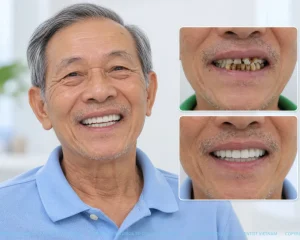

Zirconia dental implants are becoming a popular option for patients who want a strong, tooth-colored root replacement without visible metal. Made from biocompatible ceramic, they appeal to anyone with metal sensitivities or a focus on natural aesthetics. If you’re weighing your options, explore this guide with Dentist in Vietnam to see whether zirconia fits your smile goals.
1. What zirconia dental implants are?
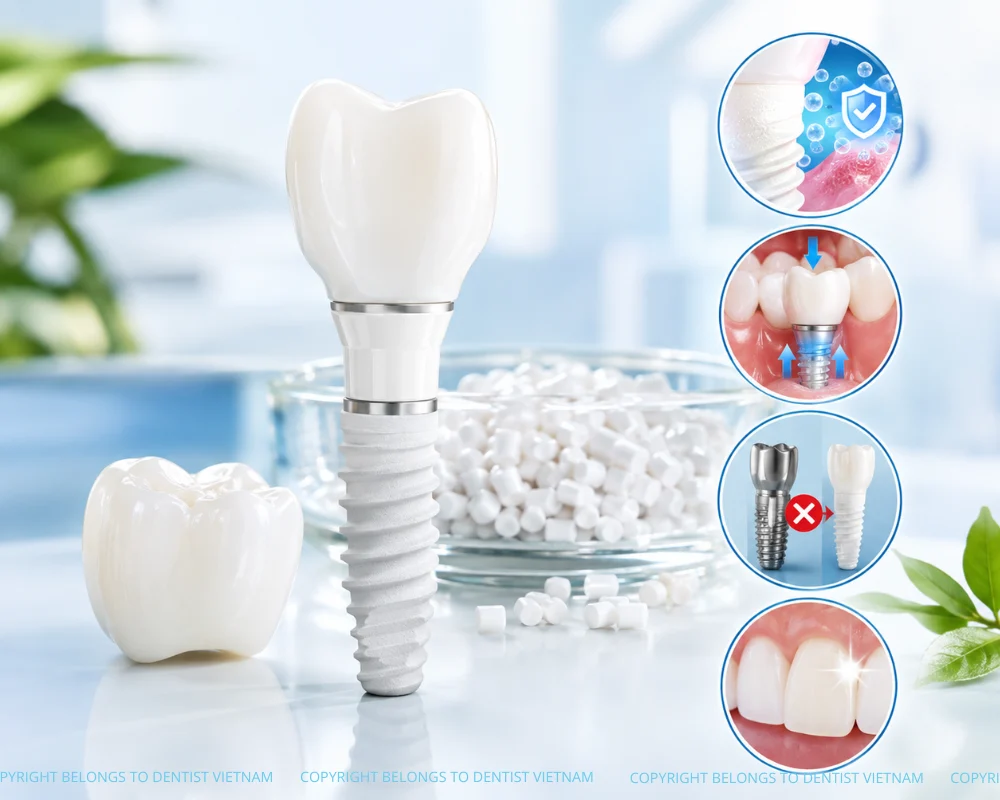
This ceramic implant is a single-piece root that replaces a missing tooth and supports a crown above the gumline. Many meet ISO 13356 material standards, and clinics confirm current FDA clearance before your consultation. The sections below cover the material and the two design types.
1.1 The zirconium dioxide material
Zirconium dioxide (ZrO₂) is a dense, bio-inert ceramic that the body accepts without an immune reaction. It resists fracture better than porcelain, holds up under normal chewing force, and contains no metal alloys. Its naturally white, tooth-like shade is why many patients prefer it over titanium.
1.2 One-piece and two-piece zirconia implants
Zirconia implants come in two main designs today. One-piece implants fuse the root and abutment into a single ceramic unit placed in one surgical step, with the crown cemented on top after healing. Two-piece implants use a separate screw-retained abutment, offering more flexibility for angle correction and crown fitting options.
- One-piece implants: Root and abutment fused, placed in a single step, less angulation adjustment after placement.
- Two-piece implants: Screw-retained abutment, more flexibility for angle correction, newer to the ceramic implant market.
2. How zirconia dental implants differ from titanium implants
Zirconia dental implants and titanium implants both integrate well with bone, but they differ in appearance, strength, and cost. The table below compares the two materials across the factors that matter most to patients.
| Criteria | Zirconia | Titanium |
| Color | Ivory-white | Gray, may show at gumline |
| Allergy risk | None documented | ~0.6% of patients |
| Bite strength | More brittle | More flexible |
| Plaque buildup | Lower | Slightly higher |
| Price per tooth | $2,800-$4,500 | $2,000-$3,500 |
| Track record | 15-20 years | 50+ years |
Zirconia costs more but skips the metal entirely, giving patients a whiter smile with virtually no allergy risk. Titanium remains the stronger and longer-tested choice overall, so the right pick still depends on your budget, bite force, and aesthetic priorities.
3. Benefits of zirconia dental implants
Patients choose this ceramic option for reasons that go well beyond biocompatibility alone. The material offers natural aesthetics, an allergy-free composition, and a gum-friendly surface, explaining why zirconia keeps gaining popularity among cosmetically-focused patients today.
3.1 A natural tooth-colored appearance
Zirconia dental implants carry a natural ivory color that blends with surrounding teeth, even at the gumline. This makes them a strong choice for front teeth and visible smile zones, where shadowing is easy to spot. Titanium implants can show a gray tint through thin gum tissue, something zirconia avoids.
3.2 Metal-free and hypoallergenic
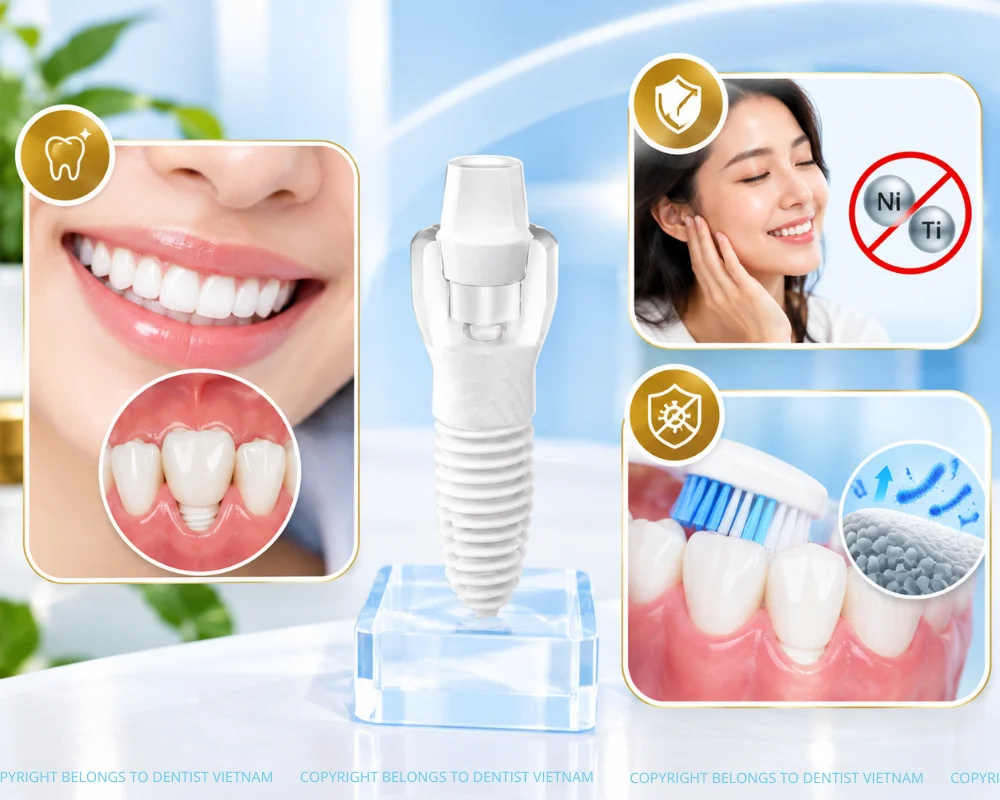
Because zirconia contains no metal, it suits patients with metal sensitivities or existing concerns about titanium. The ceramic is non-conductive, so it does not transmit hot or cold sensations the way metal implants sometimes do today. This makes zirconia a safer choice for patients who have reacted to metal jewelry.
3.3 Lower plaque accumulation
Zirconia’s smooth surface resists plaque and bacterial buildup more effectively than metal in several published studies. Less plaque adhesion generally supports healthier gum tissue around the implant site and may lower the risk of gum inflammation. Regular brushing and checkups remain essential no matter which implant material a patient chooses.
4. Downsides to know before choosing zirconia
No implant material suits every single patient, and zirconia dental implants are certainly no exception. Cost, bite-force strength, and long-term clinical data all differ noticeably from titanium, so weigh these trade-offs carefully for your smile.
- Higher upfront cost: Runs 20-30% more than titanium, mainly due to specialized milling and fewer trained ceramic-implant dentists.
- More brittle under heavy bite force: Higher fracture risk than titanium if you grind your teeth or bite very hard.
- Shorter track record: Around 15-20 years of clinical data, versus 50+ years for titanium.
- Fewer size options: Mostly one-piece designs, so fewer sizes and angles than titanium’s modular systems.
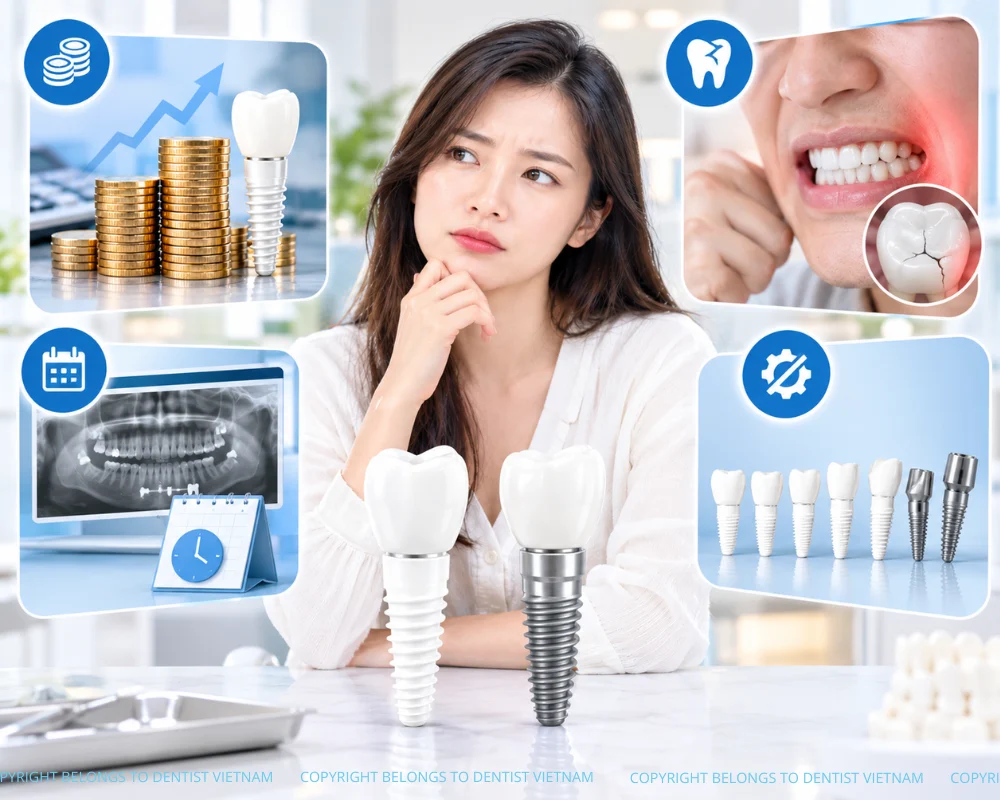
These trade-offs rarely rule zirconia out entirely, but they matter most for heavy grinders or complex cases. Discuss your bite habits and budget openly with your dentist before deciding which material truly suits your case.
5. The cost of zirconia dental implants
The cost of these implants depends on several interconnected factors, from the implant brand to the clinic’s location. The sections below break down average per-tooth pricing, the variables that shift the final price, and how Vietnam compares to Western markets.
5.1 Average cost per tooth
A single zirconia dental implant, including the implant post, abutment, and zirconia crown, typically runs from $2,800 to $4,500 per tooth in the United States, and roughly $1,200 to $2,200 in Vietnam. This estimate usually excludes X-rays, 3D CT scans, and bone grafting, which are quoted separately after your initial exam.
5.2 What affects the zirconia dental implants price?
Several variables influence zirconia dental implants cost, and no two patient cases price out exactly the same way today. Knowing these factors in advance helps you compare clinic quotes accurately and avoid surprise charges later.
- Implant brand: Premium ceramic brands cost more than newer or lesser-known systems.
- Crown type: Layered zirconia crowns cost more than monolithic ones.
- Dentist experience: Higher case volume and specialist training add to the fee.
- Bone grafting: Low jawbone density adds a separate grafting cost.
- Clinic location: Prices vary sharply by country and city.
6. Full-arch restoration with zirconia all-on-4 implants
For patients missing most or all of their teeth, zirconia dental implants can anchor a full-arch bridge through the All-on-4 approach today. This section explains how the technique works, what a full-arch package costs, and who makes a good candidate.
6.1 How zirconia all-on-4 works
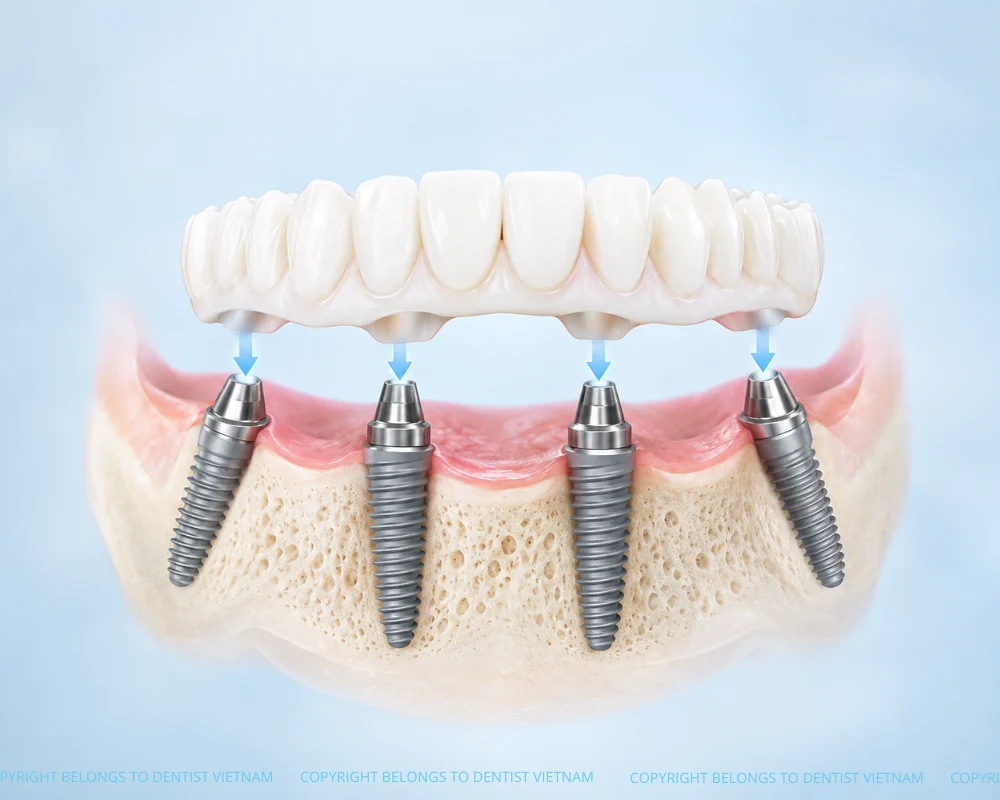
With all on 4 dental implants zirconia, four implants, two straight in front and two angled toward the back of the jaw, support a full-arch zirconia bridge. This layout maximizes bone contact, often avoiding a bone graft, and many clinics usually fit a temporary bridge the same day as surgery.
6.2 The cost of a zirconia all-on-4 package
A full zirconia all on 4 dental implants package for one arch typically ranges from $16,000 to $24,000 in the US, compared to roughly $6,000 to $9,500 in Vietnam. This full-arch option restores function and a natural smile. Most packages include:
- Four implants and abutments
- Temporary acrylic bridge during healing
- Final monolithic zirconia bridge
- Follow-up visits for one year
6.3 Who is a good candidate for all-on-4 zirconia?
Not every patient qualifies as a strong fit for zirconia dental implants placed as a full arch, since bone volume and bite habits both matter. Good candidates generally share the following traits, which a dentist confirms during your initial consultation:
- Full-arch tooth loss: Missing most or all teeth, or wearing a loose, unstable denture.
- Adequate jawbone density: Enough bone for four implants, or willing to undergo grafting first.
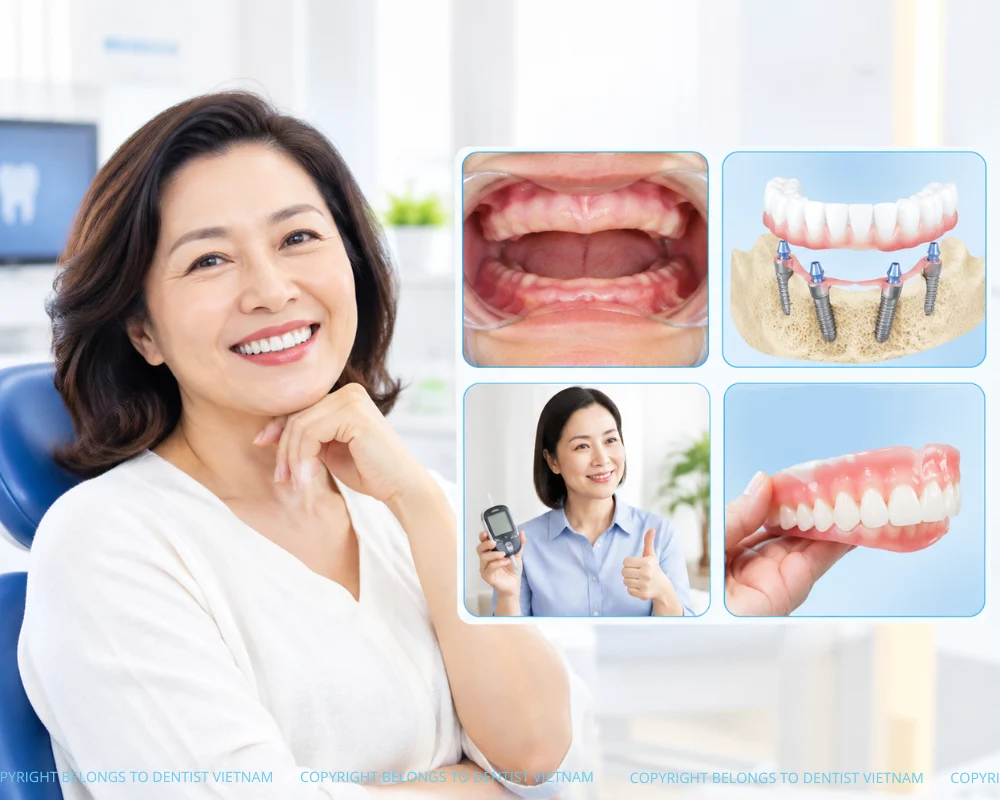
- Good general health: No uncontrolled diabetes or active gum disease that would slow healing.
- Denture wearers: Want a fixed bridge instead of a removable one.
7. How long zirconia dental implants last?
With proper care, these implants often last 15 to 20 years, and many patients keep them for life. Unlike a natural tooth root, the implant itself cannot decay, though the surrounding gum and bone still need regular attention. Some clinics offer a limited warranty on the implant post, though coverage terms vary by provider and country.
- Brush and floss daily around the implant crown just as you would a natural tooth, paying extra attention to the gumline.
- Keep regular checkups, typically every six months, so your dentist can catch early signs of gum inflammation.
- Avoid excessive bite force, such as chewing ice or hard objects, which can stress the ceramic material over time.
8. Why choose Vietnam for zirconia dental implants?
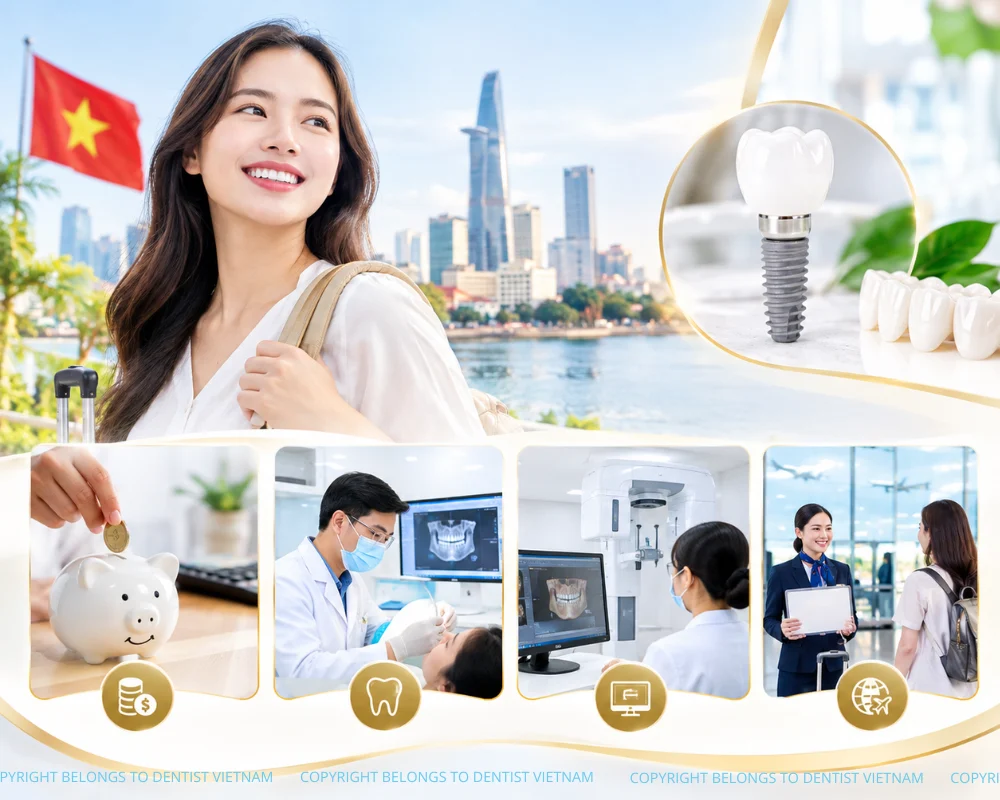
Vietnam has become a leading destination for patients seeking a natural-looking, metal-free option at lower cost without compromising quality. Many Vietnamese implant dentists trained abroad, and top clinics use the same 3D CT and CAD/CAM technology found in the US or Australia. International patients also get dedicated support throughout.
- Significant cost savings, often 55-75% less than comparable pricing in the US, UK, or Australia.
- Qualified, experienced dentists, many with international training and years of implant-specific case volume.
- Modern clinic technology, including 3D CT imaging and CAD/CAM systems for precise crown design.
- International patient support, including translation services, airport pickup, and coordinated visit planning.
9. Conclusion
Zirconia dental implants offer a metal-free, natural-looking option worth considering if aesthetics, biocompatibility, or gum health are priorities in your decision. While costs and long-term data differ from titanium, a qualified dentist can help determine the best fit for your smile. Visit Dentist in Vietnam to read clinic reviews and learn more before you decide.