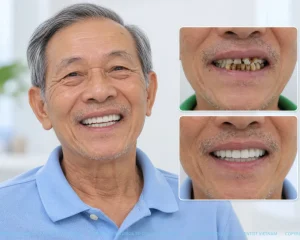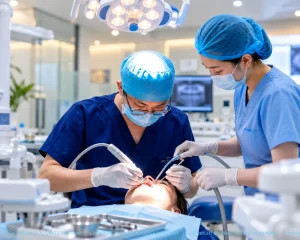

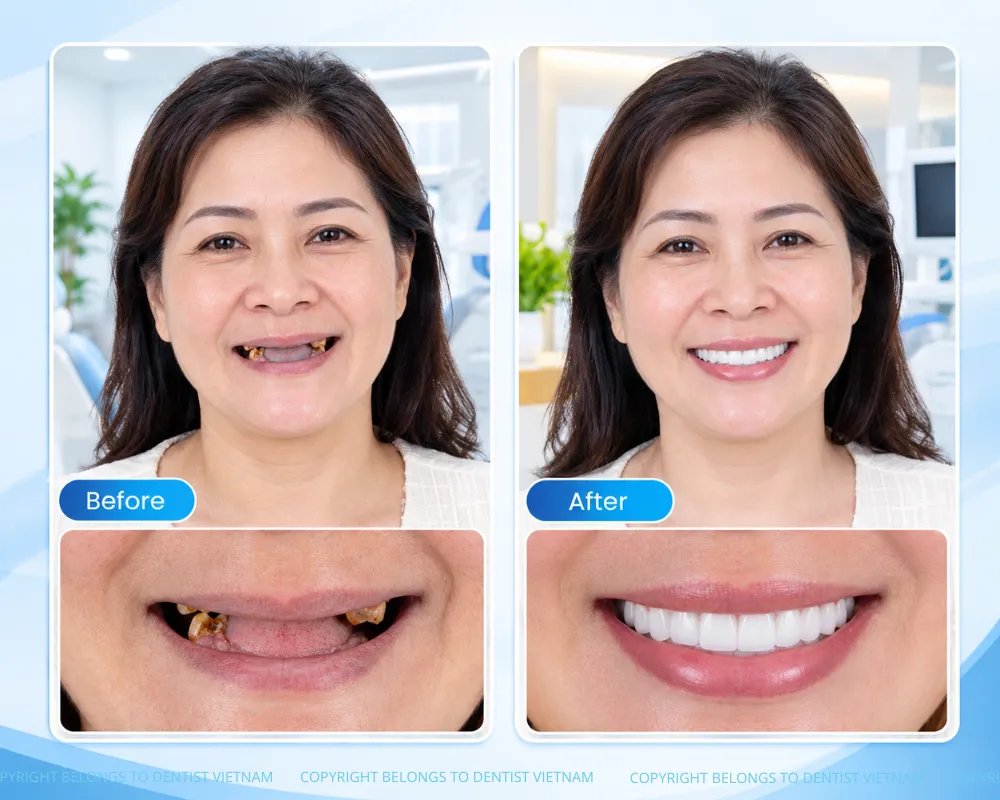
Before and after all on 4 dental implants, patients often look years younger and finally eat without worry. This full-arch approach replaces failing or missing teeth with a fixed, natural-looking smile in a single visit. Curious how dramatic the change can be? Explore more patient stories and reviews with Dentist in Vietnam.
1. What are all-on-4 dental implants?
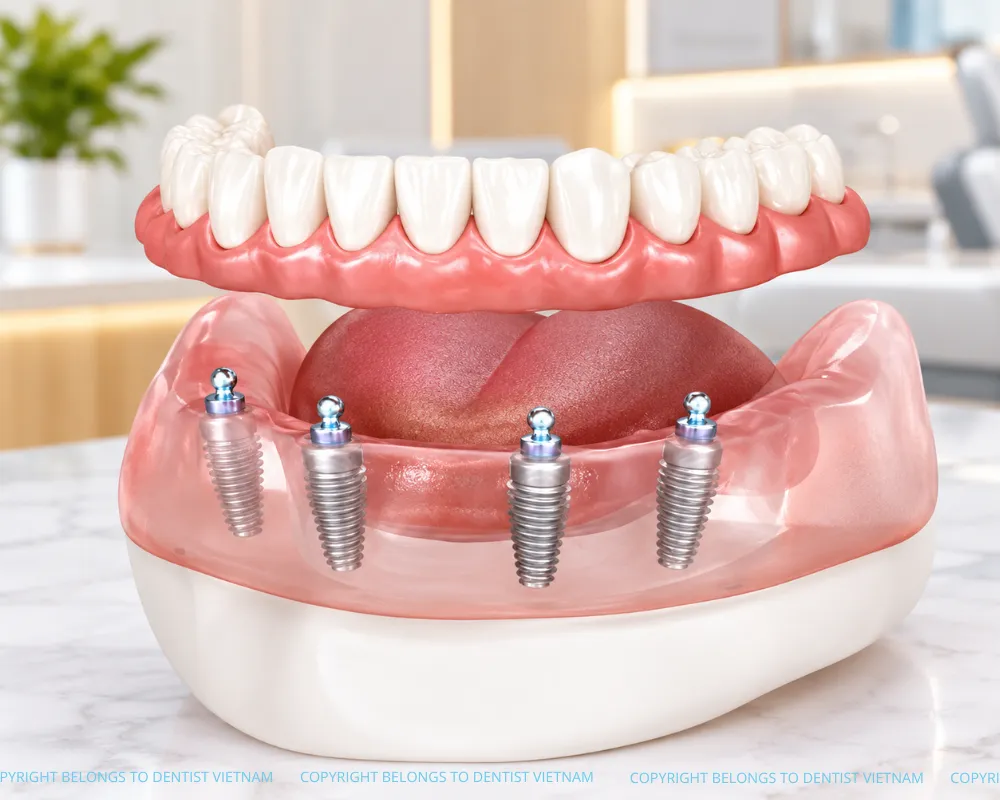
All-on-4 dental implants replace a full arch of missing teeth using just four titanium posts, a method pioneered by Dr. Paulo Malo. The two rear posts angle into denser jawbone, letting four implants support a fixed bridge, which is why before and after all on 4 dental implants cases look so different from dentures.
Key features of the approach include:
- Four implant posts per arch (upper, lower, or both)
- A fixed bridge attached the same day as surgery
- No need for a full denture base covering the palate
- Suitable for many patients who have lost most or all of their teeth in one arch
1.1 How the four posts work
The two front implants sit upright near the incisors, while the back two angle roughly 30-45 degrees to reach thicker bone and avoid the sinus or nerve areas. Each titanium fixture connects to an abutment, which anchors a fixed bridge. Because the posts stabilize instantly, patients typically leave with a temporary bridge the same day, a hallmark of every all on four dental implants before and after story.
1.2 All-on-4 vs. dentures and traditional implants
All-on-4 implants stay fixed permanently, unlike removable dentures that shift or need daily adhesive. Traditional bridges often need 6-8 posts plus grafting, while all on 4 dental implants before and after comparisons show a faster, lower-cost path using just 4 posts for most patients today.
| Feature | All-on-4 | Traditional Option |
| Implants per arch | 4 | 6-8 (implants) or 0 (dentures) |
| Stability | Fixed, non-removable | Removable or partially fixed |
| Bone grafting | About 1 in 10 cases | Most cases with low bone density |
| Timeline | Same-day temporary, final at 3-4 months | 6-9 months before final loading |
2. What changes will you see before and after?
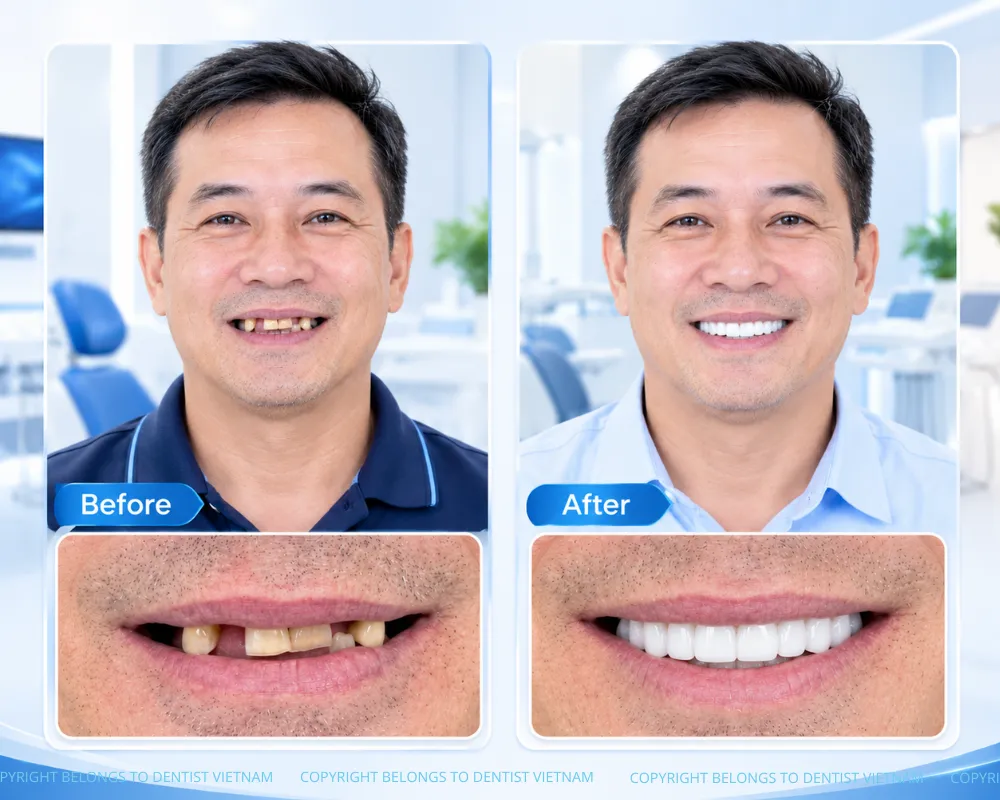
Before and after all on 4 dental implants photos capture three connected changes: how patients look, how they function, and how they feel. Each dimension builds on the others, turning a dental procedure into a visible shift in daily life.
2.1 Facial changes
Before and after all on 4 dental implants facial changes are often the most noticeable. Long-term denture wearers develop a sunken look as jawbone shrinks and lips lose support. Fixed implants halt that bone loss, restoring cheek volume and jawline definition, while lip support improves almost immediately after the temporary bridge is placed.
2.2 Chewing and speech changes
Chewing and speech often decline for years before implants are placed. Before and after all on 4 dental implants comparisons show patients eating firm foods again and speaking clearly, since the fixed bridge restores strong bite force and removes the bulky denture base for good.
Common before-and-after contrasts include:
| Before | After |
| Soft, mashed foods only | Firm and chewy foods again |
| Slipping or clicking while speaking | Clear, stable speech |
| Avoiding hard-textured meals in public | Eating normally without worry |
2.3 Confidence changes
Many patients withdraw socially before care, avoiding smiles, laughter, or group photos out of embarrassment. Before and after all on 4 dental implants stories consistently describe a turning point: patients smiling freely, speaking up in meetings, and reconnecting with friends. That emotional shift often matters as much to patients as the physical result itself.
3. Real patient case studies
Before and after all on 4 dental implants cases vary by starting condition, arch involved, and complexity. The three examples below cover an upper arch, a lower arch, and a full-mouth case, showing how the same approach adapts to different needs.
3.1 Upper arch case
A patient in their late 50s arrived with severely worn, failing upper teeth after years of untreated decay. Following a CT scan confirming adequate bone, four implants were placed with a same-day temporary bridge. Within four months, the final zirconia bridge was fitted, restoring a full, natural-looking upper arch.
3.2 Lower arch case
A patient in their early 60s had lost most lower teeth to gum disease, leaving thin jawbone at the back. Angled posterior implants reached denser bone near the front, avoiding grafting. A fixed lower bridge followed within four months, giving a stable bite that matched the restored upper arch.
3.3 Full mouth case
A patient in their 70s had worn full dentures for over a decade and struggled with fit and comfort. Upper and lower All-on-4 arches were placed together. Before and after all on 4 dental implants photos of this case show the widest change: fuller face, firm bite, and a confident smile.
4. Recovery timeline stage by stage
Before and after all on 4 dental implants results unfold in stages, not overnight. Understanding the timeline, from surgery day to the final bridge, helps set realistic expectations for healing, adjustment, and the gradual return of full function.
- Day 0-1, same-day bridge: Surgeons place four implants per arch and attach a fixed temporary bridge within hours, leaving patients with a full smile and only mild swelling.
- Week 1-6, healing and adaptation: Gum tissue heals steadily, soreness fades by week two or three, speech adjusts to the new bridge, and diet expands from soft to slightly firmer foods.
- Month 3-4, final bridge: Osseointegration is confirmed, the temporary bridge is swapped for a custom zirconia bridge, and before and after all on 4 dental implants results become permanent.
5. Who is the ideal candidate?
Before and after all on 4 dental implants results depend heavily on starting bone density and gum health. Patients with adequate bone typically qualify immediately, while others simply need a short grafting step first instead.
5.1 Bone and gum requirements
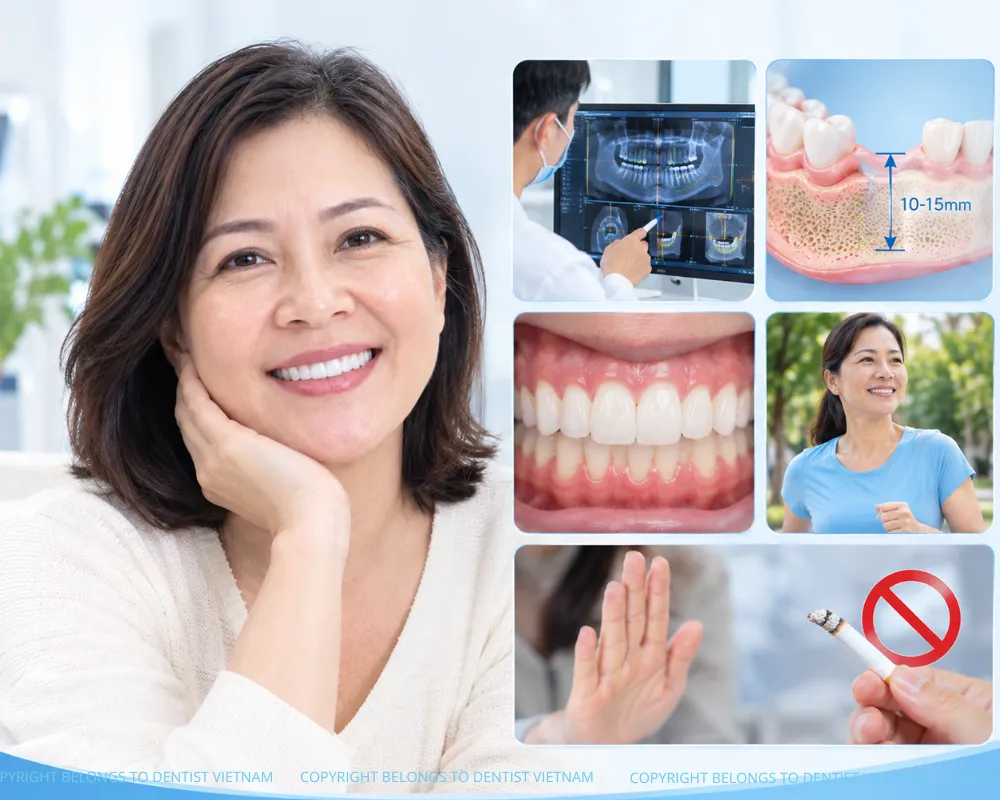
Ideal candidates have at least 10-15mm of jawbone height and healthy gum tissue with no active infection or periodontal disease. A CBCT scan confirms bone density and precisely maps nerve and sinus positions before the four implants are planned and placed.
- Minimum 10mm bone height in the posterior jaw
- No untreated gum disease or active infection
- Stable overall health for a short outpatient surgery
- Non-smoker or willing to pause smoking during healing
5.2 When grafting is needed
Patients with severe bone loss, often after a decade or more of denture wear, need grafting before implants can anchor securely. Grafting typically adds 4-6 months before implant placement, but most patients still achieve a fully fixed arch with the same long-term stability as those who skipped grafting.
6. All-on-4 vs. other options
Choosing between full-arch options depends on bone volume and budget. All-on-4 suits most patients with adequate bone, dentures cost least upfront, and All-on-6 adds support for weaker bone. Before and after all on 4 dental implants results are similar across all three for typical cases.
| Feature | All-on-4 | Dentures | All-on-6 |
| Implants per arch | 4 | 0 | 6 |
| Fixation | Fixed | Removable | Fixed |
| Best for | Adequate bone | Lowest budget | Lower bone density |
| Bone preservation | Good | Poor | Very good |
6.1 All-on-4 vs. dentures
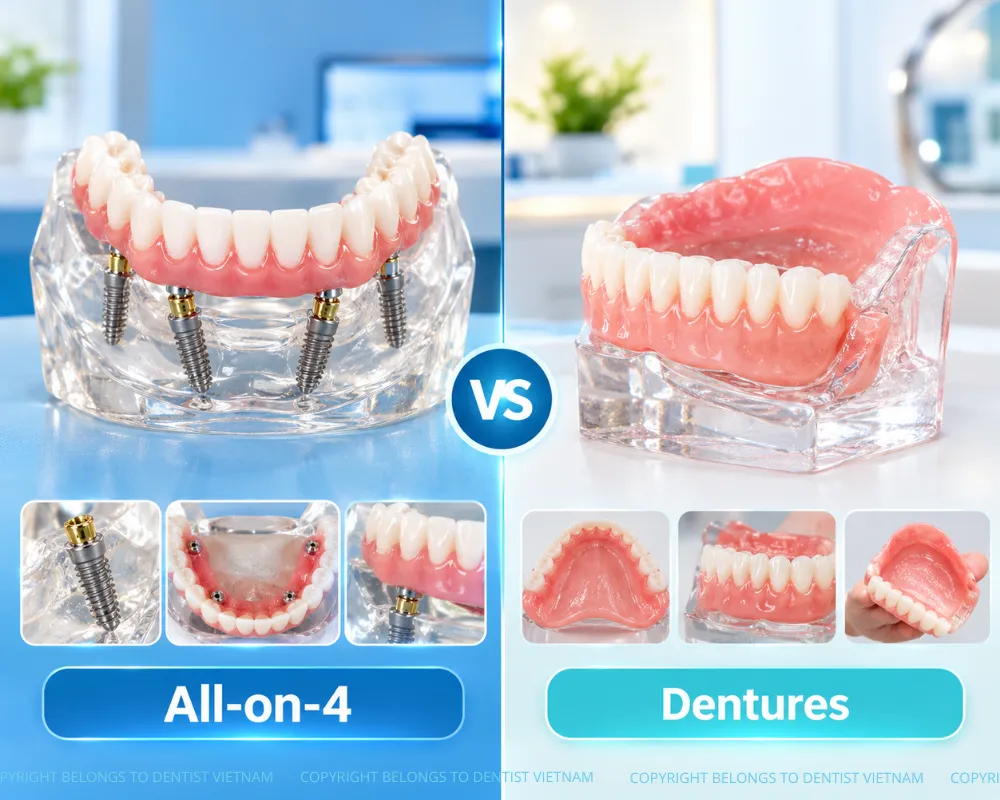
All-on-4 implants stay fixed; dentures slip while eating or speaking, even with adhesive. A fixed bridge has no palate covering, so there’s no friction or sore spots. Implants also stimulate the jawbone through chewing pressure, while an unsupported ridge under a denture shrinks measurably within the first year of use.
6.2 All-on-4 vs. All-on-6
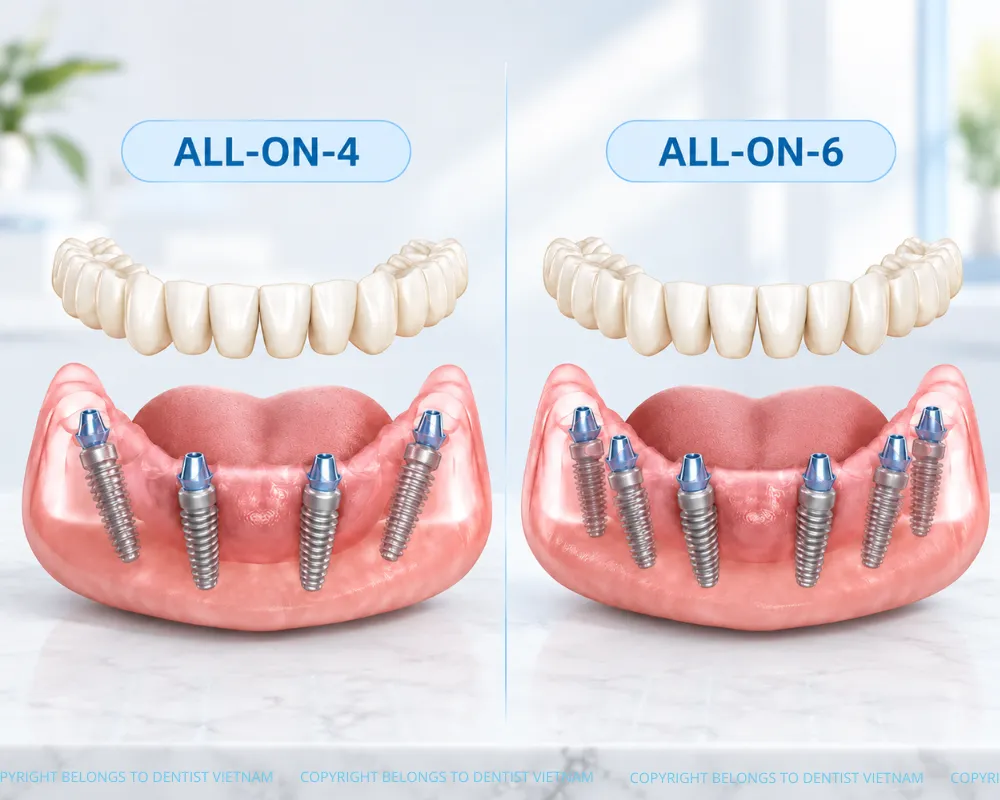
Six implants distribute bite force across more points, making All-on-6 the better choice for patients with lower bone density or heavy teeth grinding. It also adds redundancy: if one implant fails, the rest still hold the bridge. Patients with adequate bone and no grinding history rarely need more than four.
7. Cost and why patients choose Vietnam
Cost is one of the biggest reasons patients travel abroad for full-arch care. In the US, UK, and Australia, a single All-on-4 arch can cost as much as a small car. Vietnam offers the same quality at a fraction of the price for international patients.
7.1 Cost comparison by country
Exact pricing depends on the clinic, implant brand, and whether bone grafting is needed, so treat these as general ranges. Even after flights and accommodation, most patients still save significantly by choosing Vietnam. Cost remains a leading factor for patients who travel abroad for care.
| Country | Approx. Cost Range (per arch) |
| United States | $20,000-$30,000 |
| Australia | $18,000-$28,000 |
| United Kingdom | $20,000-$29,000 |
| Vietnam | $5,000-$9,000 |
7.2 Consultation and quote process
Getting a personalized estimate is straightforward and usually free of charge. Most clinics carefully review photos and scans within a few days, then guide patients through consultation, quote, and travel planning in four simple steps.
- Submit recent photos, plus any existing X-rays or CT scans, through a simple online form.
- Join a free remote consultation with a dentist to review your goals, health history, and overall candidacy.
- Receive a personalized, itemized quote outlining the number of implants needed, the expected timeline, and total cost.
- Plan your travel dates with support for flights, accommodation, and coordinated clinic scheduling once you’re ready to move forward.
8. Conclusion
Before and after all on 4 dental implants results show a consistent pattern: renewed facial structure, restored chewing ability, and rebuilt confidence, typically achieved within three to four months. Results vary by individual bone health and case complexity, but the overall transformation remains life-changing for most patients. Visit Dentist in Vietnam to explore verified reviews.