
Vietnam ranks among Asia’s top destinations for the all on 4 dental implants procedure – offering fixed, permanent teeth at 60-80% less than Western costs. This guide covers every stage of the all on 4 dental implants procedure as performed at reputable clinics in Ho Chi Minh City and Hanoi in 2026.
1. What is the all on 4 dental implants procedure?
The all on 4 dental implants procedure is a full-arch restoration technique that uses four titanium implants to anchor a fixed prosthetic bridge. Two anterior implants are placed vertically; two posterior implants are angled at 30-45 degrees to maximize contact with available bone density – often eliminating the need for bone grafting entirely.
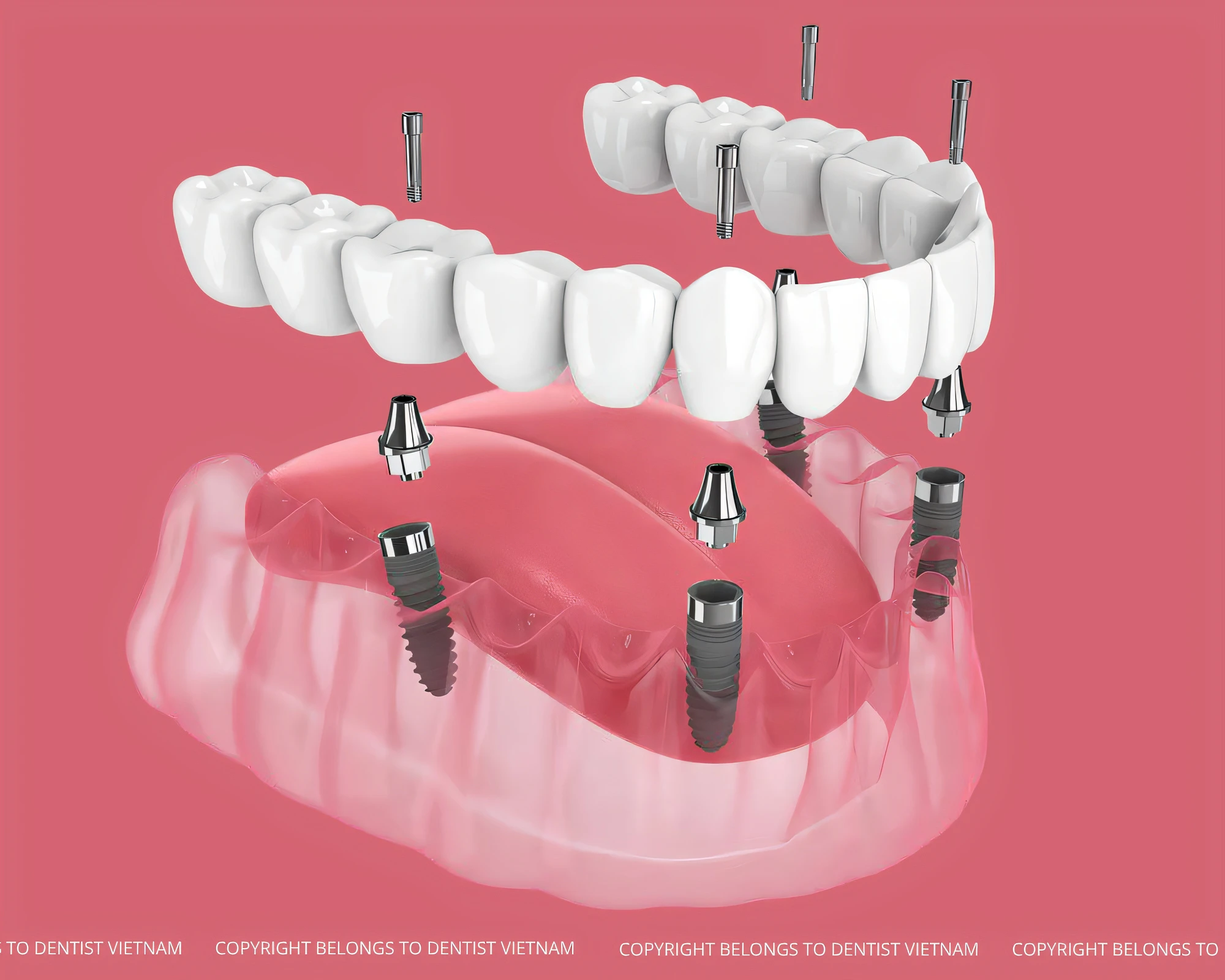
The angled placement is what sets this approach apart from traditional multi-implant protocols. It distributes chewing load more evenly and allows same-day temporary teeth in most cases.
2. Who is a candidate for this procedure?
Most adults with complete or near-complete tooth loss qualify. Clinics in Vietnam use 3D CBCT scans to confirm bone volume before committing to a treatment plan.
Common candidate profiles:
- Patients with moderate bone loss (severe cases may require zygomatic implants instead)
- Adults in good general health, with well-controlled conditions such as diabetes
Age is rarely a barrier. Bone density and overall systemic health carry more weight in eligibility. Patients unsure whether they qualify can request a remote pre-assessment – most clinics offering the all on 4 dental implants procedure in Vietnam provide this at no cost.
3. Step-by-step procedure for all on 4 dental implants in Vietnam
The all on 4 dental implants step by step process in Vietnam follows a structured two-visit model. Here is exactly what happens at each stage.
3.1 Step 1 – Remote consultation and pre-screening
The all on 4 dental implants process begins before patients board a flight. Most established clinics in Hanoi and Ho Chi Minh City offer remote pre-assessments via email or video call.
Patients submit recent X-rays or panoramic scans and a treatment coordinator reviews bone volume, medical history and case complexity. This step sets realistic expectations and generates a preliminary cost estimate with no obligation.
3.2 Step 2 – In-clinic diagnostic imaging (Day 1, First Visit)
On arrival, the clinic conducts a full diagnostic session. This includes:
| Diagnostic Tool | Purpose |
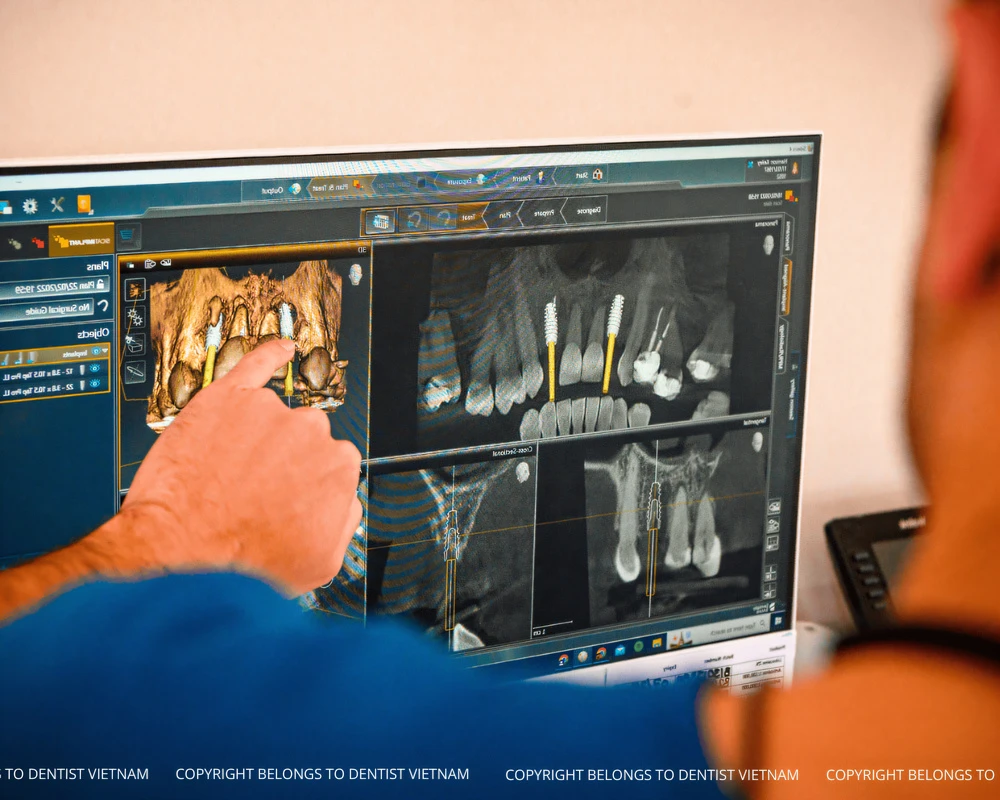
| Cone Beam CT (CBCT) scan | 3D mapping of bone depth, nerve location, sinus position |
| Intraoral digital scan | Bite registration and prosthesis planning |
| Blood panel | Clotting time, blood sugar, general health clearance |
The surgical team uses planning software to determine the precise angle, depth and position of each implant before any incision is made. Patients review a digital simulation of their projected outcome at this stage.
3.3 Step 3 – Extraction and jaw preparation (Day 2-3)
Any remaining teeth scheduled for removal are extracted. In straightforward cases, extractions and implant placement happen in the same session. Where significant gum healing is needed first, extractions may occur one day prior.
Minor alveoloplasty – smoothing of the bone ridge – is performed as needed to create a clean transition line for the prosthesis. This detail affects both function and aesthetics of the final restoration.
3.4 Step 4 – Implant surgery: The core of the all on 4 dental implants procedure (Day 2-3)
The surgical session runs approximately two to four hours per arch under local anesthesia; IV sedation is available at most clinic-hospitals in both cities.
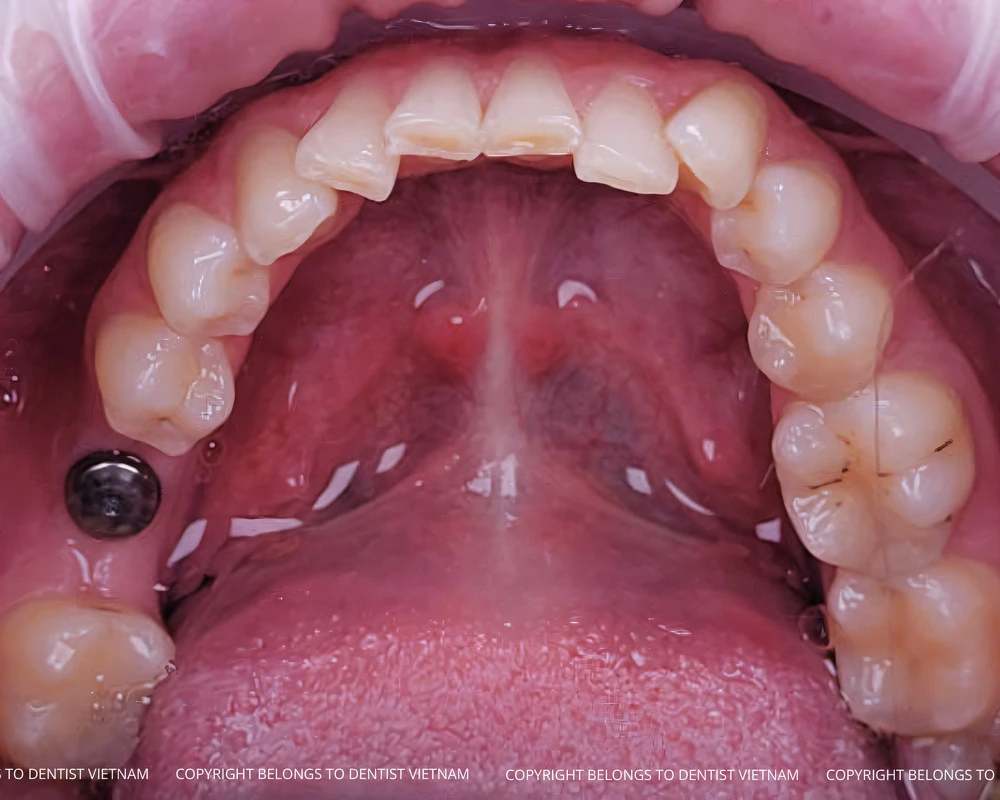
What happens during surgery:
- Sterile surgical guide seated to match the digital plan
- Four titanium implants inserted – two straight anteriorly, two angled posteriorly
- Primary stability confirmed at 35-45 Ncm torque (minimum threshold for immediate loading)
- Multi-unit abutments connected to correct implant trajectory
Achieving the required torque at each implant site is a mandatory clinical checkpoint. If primary stability is insufficient at any site, the implant position is adjusted before proceeding.
3.5 Step 5 – Same-day temporary bridge fitting
Within hours of surgery, a pre-fabricated provisional bridge is fixed to the abutments. Patients leave the clinic with a full set of functional teeth on the day of surgery.
The temporary bridge is made from durable acrylic reinforced with a titanium framework. It allows soft-food eating and normal speech while the implants undergo osseointegration. This immediate result is one of the defining advantages of the all on four dental implants procedure compared to traditional multi-implant protocols.
3.6 Step 6 – Recovery and osseointegration (3-6 months)
The all on 4 dental implants timeline between visit one and visit two spans three to six months. During this period, the titanium posts fuse biologically with the surrounding jawbone – a process called osseointegration. This cannot be shortened without increasing failure risk.
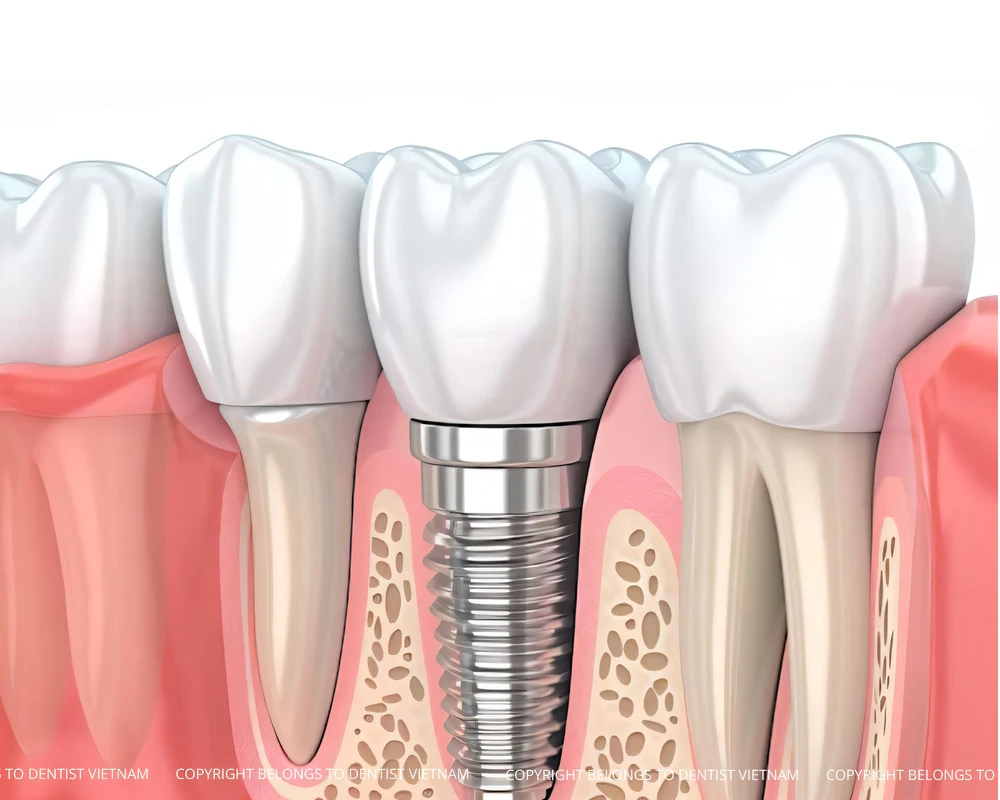
Recovery milestones:
- Weeks 1-2: Soft diet (soups, smoothies, soft rice). Swelling and mild discomfort managed with prescribed medication.
- Weeks 3-8: Gradual reintroduction of soft-textured foods. Most patients report returning to normal daily activity within 3-5 days.
- Months 2-5: Osseointegration progresses. Remote check-in with the Vietnam clinic via video call or submitted X-rays.
- Month 5-6: Healing confirmed by imaging. Patient scheduled for second visit.
Patients can return home and manage this phase locally. Many Vietnam clinics coordinate with the patient’s home-country dentist for routine monitoring.
3.7 Step 7 – Final prosthesis fitting (Second visit, 5-7 Days)
The second visit is the final stage of the all on 4 dental implants process. Once osseointegration is confirmed, the provisional bridge is removed and precise digital impressions are taken. The in-house lab fabricates the permanent prosthesis using CAD/CAM milling – typically within two to three working days.
4. All on 4 dental implants timeline: How long does the full process take?
The complete all on 4 dental implants timeline runs four to seven months from first consultation to final bridge placement. Most of this time is passive healing at home.
| Phase | Duration |
| First visit (consultation + surgery) | 7-10 days in Vietnam |
| Osseointegration at home | 3-6 months |
| Second visit (final bridge) | 5-7 days in Vietnam |
| Total calendar time | 4-7 months |
5. How much does the all on 4 dental implants procedure cost in Vietnam?
Vietnam pricing sits well below comparable treatment in Australia, the US or UK – using the same implant brands.
| Country | Cost per Arch (approx.) | ||
| United States | $20,000-$35,000 | ||
| Australia | $22,000-$40,000 | ||
| Vietnam | $4,500-$9,000 |
Reputable clinics use Nobel Biocare, Straumann, Osstem, or Dentium implants. The cost gap reflects lower operating expenses, not lower clinical standards. For patients comparing options across Southeast Asia, the all on 4 dental implants procedure in Vietnam consistently offers the strongest combination of cost, technology and surgeon experience.
6. What makes the all on 4 dental implants procedure in Vietnam different?
Top-tier clinics in Ho Chi Minh City and Hanoi stock internationally recognized implant systems. Nobel Biocare and Straumann carry manufacturer lifetime warranties on the fixture itself; the prosthesis warranty varies by clinic (typically 5-10 years on materials and workmanship).
Always request sealed-packaging traceability documentation for the specific implant lot used in surgery. Reputable providers supply this as standard.
7. Is the all on 4 dental implants procedure in Vietnam safe?
Yes, when performed at a Ministry of Health-licensed clinic by a credentialed implantologist. The all on 4 dental implants procedure has a documented 10-year survival rate of 94.8% according to research published in Clinical Implant Dentistry and Related Research. Choosing an established clinic with verifiable surgeon credentials and recognized implant brands keeps risk within internationally accepted clinical ranges.
8. FAQ: All on 4 Dental Implants Procedure in Vietnam
Where is the best place in Vietnam to get All on 4 implants?
Ho Chi Minh City and Hanoi both have experienced implant specialists and internationally certified clinics. The choice typically comes down to flight connections and personal preference for city.
Why choose Vietnam for the all on 4 dental implants procedure?
Patients save 60-80% compared to Western countries while accessing the same premium implant brands, modern CBCT technology and surgeons with international postgraduate training.
What is the all on 4 dental implants procedure, exactly?
Four titanium implants are placed in the jaw – two straight, two angled – to support a fixed full-arch bridge without requiring individual implants for each tooth.
How long does the step by step procedure for all on 4 dental implants take?
Surgery itself takes two to four hours per arch. The full treatment timeline, including osseointegration, spans four to seven months across two visits to Vietnam.
Is the all on 4 dental implants process painful?
Surgery is performed under local anesthesia or sedation. Post-operative discomfort – typically swelling and soreness – is manageable with prescribed medication and resolves within three to five days for most patients.
How do I verify a clinic’s credentials before booking?
Check Ministry of Health licensing, request the lead surgeon’s registration number and implant specialty training, confirm on-site CBCT capability and ask for the written warranty document before signing any agreement.
Can patients with bone loss still have the all on four dental implants procedure?
In many cases, yes. The angled posterior implants are specifically designed to engage denser anterior bone, often bypassing areas of resorption. A 3D CBCT scan determines eligibility on a case-by-case basis.
This article is produced by the Dentist Vietnam editorial team to help international patients understand the all on 4 dental implants procedure in Vietnam. It does not constitute medical advice. For a personalized assessment of the all on 4 dental implants procedure suited to your case, consult a qualified implantologist at a licensed clinic.