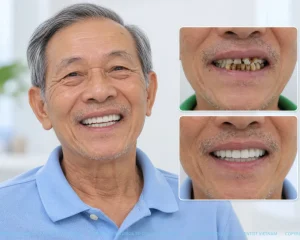

Direct composite veneers improve the appearance of front teeth by applying tooth-colored resin directly to the enamel, helping correct small chips, minor gaps, and uneven shapes. Although this approach can preserve most natural tooth structure in suitable cases, the resin may gradually stain or chip and require maintenance. Explore preparation, benefits, durability, and costs with Dentist in Vietnam.
1. What are direct composite veneers?
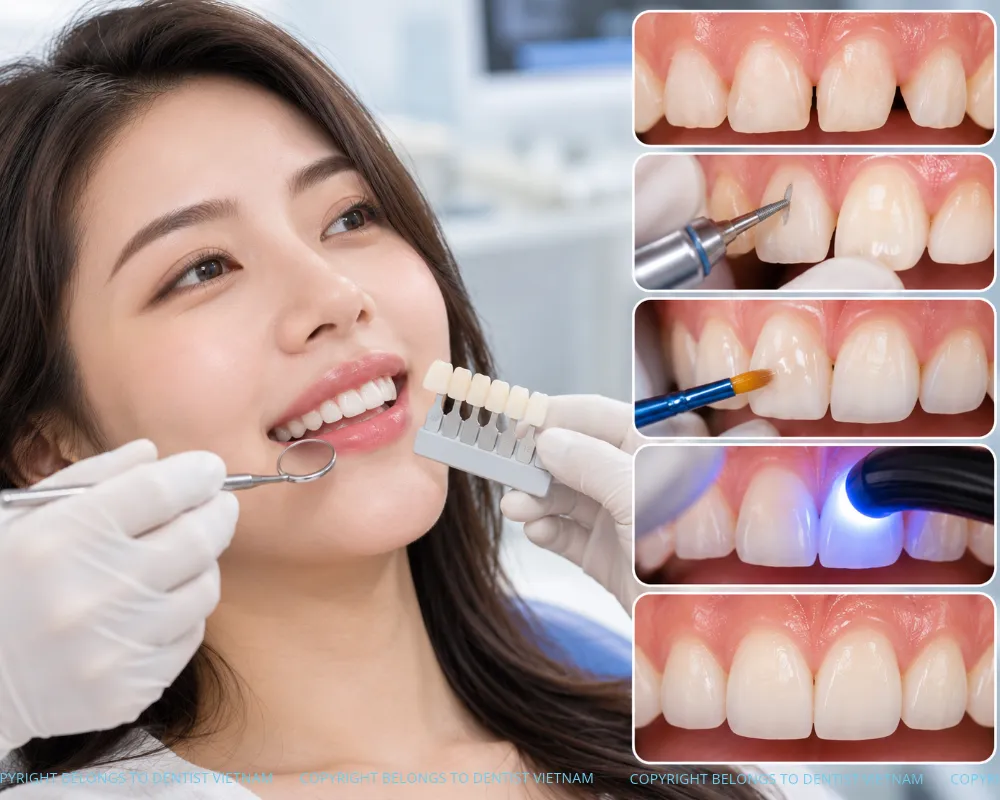
They are thin layers of tooth-colored resin placed and shaped on the front surfaces of teeth during a dental appointment. The direct composite veneers step by step process has the dentist select a matching shade, bond the material to the enamel, sculpt the desired contour, and harden each layer using a dental curing light.
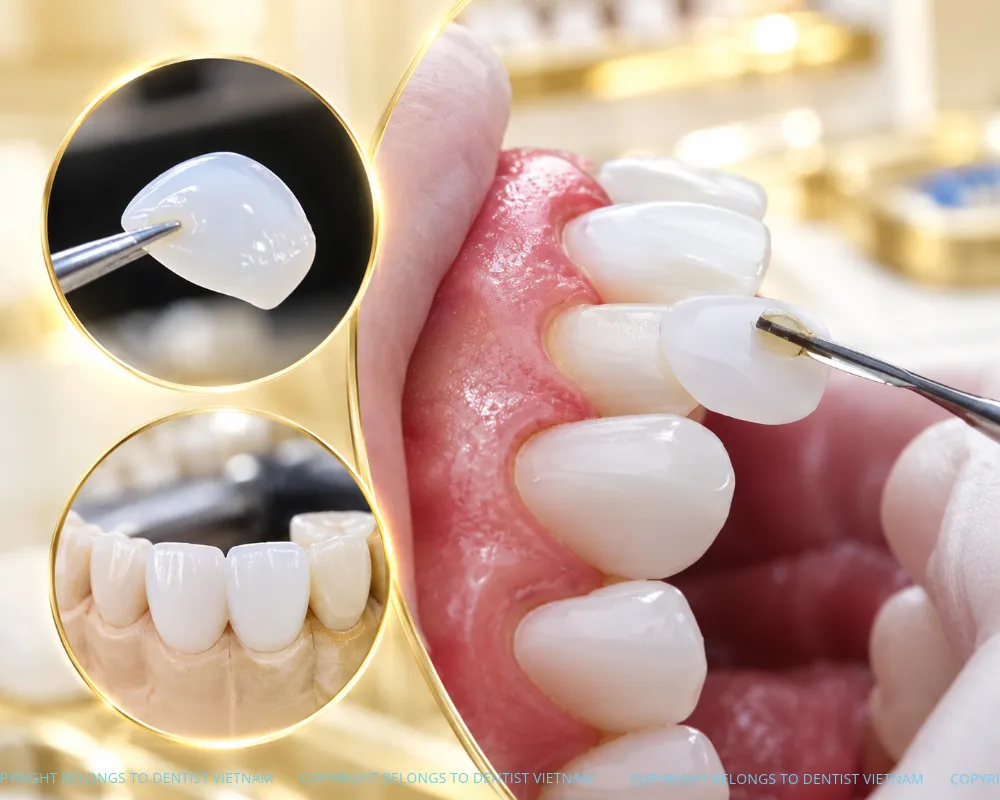
Unlike veneers made in a dental laboratory, these restorations take shape directly in the mouth, usually without temporary coverings. The direct composite veneers procedure is a form of cosmetic composite bonding, but it generally covers more of the visible tooth surface than bonding used for a small chip.
2. Who is a good candidate for direct composite veneers?
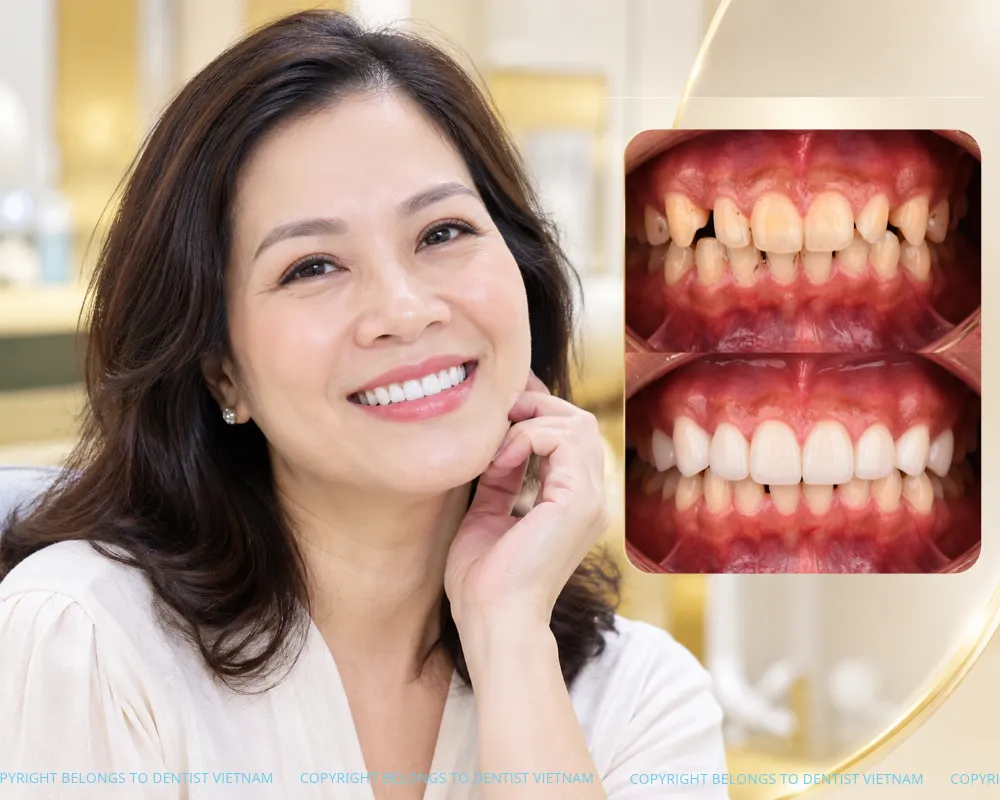
This option suits people who want modest improvements to healthy front teeth without extensive enamel reduction. A dental examination checks whether the resin additions will look natural, remain easy to clean, and withstand biting forces.
- Small chips or worn edges: Restore missing corners and smooth irregular biting edges where enough healthy tooth remains.
- Minor spaces between teeth: Close narrow gaps without creating teeth that look excessively wide or make flossing difficult.
- Uneven tooth shape: Improve a short, narrow, or asymmetrical tooth so it blends with neighboring teeth.
- Mild surface discoloration: Mask selected stains when teeth whitening alone cannot achieve the desired appearance, although deeper discoloration may need another approach.
- Localized wear: Rebuild limited enamel loss once the cause of wear has been identified and controlled.
- Healthy enamel and gums: Favorable bonding surfaces, stable gum health, and adequate bite clearance support a more predictable result.
Untreated cavities, gum inflammation, and significant bite problems should be addressed before veneer placement, while severe crowding or wide gaps may require orthodontics. Teeth with extensive damage also need a separate restorative assessment.
3. Advantages and disadvantages of direct composite veneers
These veneers can improve tooth shape and appearance without laboratory fabrication, but they also require maintenance as the resin ages. The table below compares their main benefits and limitations, helping patients assess practicality, appearance, durability, maintenance, and total cost before choosing this cosmetic option.
| Advantages | Disadvantages |
| Composite resin is shaped directly on the teeth, often in one visit | Results depend heavily on the dentist’s shaping skills |
| No laboratory fabrication is needed, reducing initial costs | Multiple veneers may require longer chairside time |
| Small gaps and uneven shapes can be corrected with minimal enamel removal | Excess resin can make teeth appear bulky |
| Tooth color and contours can be adjusted during placement | Resin may stain and lose its surface gloss over time |
| Minor chips can often be repaired with additional resin | Thin edges may chip under heavy biting pressure |
4. Direct composite veneers preparation: is tooth shaving necessary?
Tooth shaving is not always necessary for this treatment, especially when teeth are small, spaced, or slightly recessed. However, teeth that protrude or have uneven surfaces may need minimal enamel reduction to prevent bulky contours and bite interference.
Before placement, the dentist examines enamel condition, tooth alignment, gum health, and bite relationships to determine the appropriate preparation. Planning how to do direct composite veneers includes cleaning, shade selection, and surface conditioning, so the resin blends naturally with surrounding teeth and remains secure.
- No-preparation approach: Resin can be applied without shaving when tooth position allows sufficient space for a natural-looking veneer without excess bulk.
- Minimal enamel reduction: A small amount of enamel may be removed to improve tooth contours, create space, and maintain bite comfort.
- Shade and shape planning: The dentist selects a matching resin shade and checks the desired tooth shape before starting veneer placement.
- Surface cleaning and bonding: Teeth are cleaned, conditioned, and kept dry to help the composite resin bond securely to the enamel.
5. Direct composite veneers vs. indirect and porcelain veneers
Direct composite, indirect composite, and porcelain veneers can all improve chipped, uneven, or discolored front teeth, but they differ in how they are made and fitted. The comparisons below show practical differences in appointments, tooth preparation, repairs, and Vietnamese prices.
5.1 Direct vs. indirect composite veneers
Direct composite is shaped on the tooth, whereas indirect composite is made separately and bonded afterward. The table compares these approaches by placement, appointments, preparation, repairs, and available pricing information for dental clinics in Vietnam.
| Feature | Direct composite | Indirect composite |
| Fabrication | Resin shaped directly on teeth | Veneer fabricated outside the mouth |
| Appointments | Usually 1 visit | Usually 2 visits |
| Tooth preparation | Little or no enamel removal | Depends on veneer thickness |
| Appearance | Shaped and polished chairside | Finished before bonding |
| Repairability | Minor chips easily repaired | Repairs depend on damage |
Direct composite veneers are shaped on teeth during an appointment, whereas indirect composite veneers are fabricated separately before bonding. The table below compares their fabrication, number of visits, tooth preparation, appearance, and repairability to clarify the differences between these approaches.
5.2 Direct composite vs. porcelain veneers
Porcelain veneers are fabricated outside the mouth, while direct composite is shaped during the appointment. The table compares their appearance, stain resistance, enamel reduction, repair options, appointment numbers, and published per-tooth prices at Vietnamese clinics.
| Feature | Direct composite | Porcelain veneers |
| Appearance | Natural-looking, may lose gloss | Stable color and translucency |
| Stain resistance | More prone to staining | More stain-resistant |
| Durability | More frequent repairs may be needed | Generally longer-lasting |
| Tooth preparation | Little or no enamel removal | Often requires enamel reduction |
| Appointments | Usually 1 visit | Usually 2 or more visits |
| Repairability | Minor chips easier to repair | Repairs can be more complex |
| Cost per tooth | Individual quote required | $390 Emax / $580 Lisi |
Published porcelain veneer prices are $390 per tooth for Emax and $580 for Lisi, while direct composite requires a separate price quote. Composite veneers often allow simpler repairs for minor chips, whereas porcelain offers better stain resistance and generally maintains surface gloss over time.
6. How long do direct composite veneers last?
According to a 2015 clinical study involving 196 restorations, the veneers had an 80.1% survival rate after an average of 3.5 years. This finding shows that veneers can remain functional for several years, although their lifespan depends on individual dental conditions and daily habits.
Another 2022 study involving 1,043 direct veneers recorded a 4.1% annual failure rate in its 10-year survival analysis. Importantly, minor chips or surface wear do not always mean full replacement, because a dentist can sometimes restore their appearance through simple polishing or repair.
- Oral hygiene: Poor cleaning allows plaque to accumulate around veneer edges, increasing the risk of decay and gum irritation.
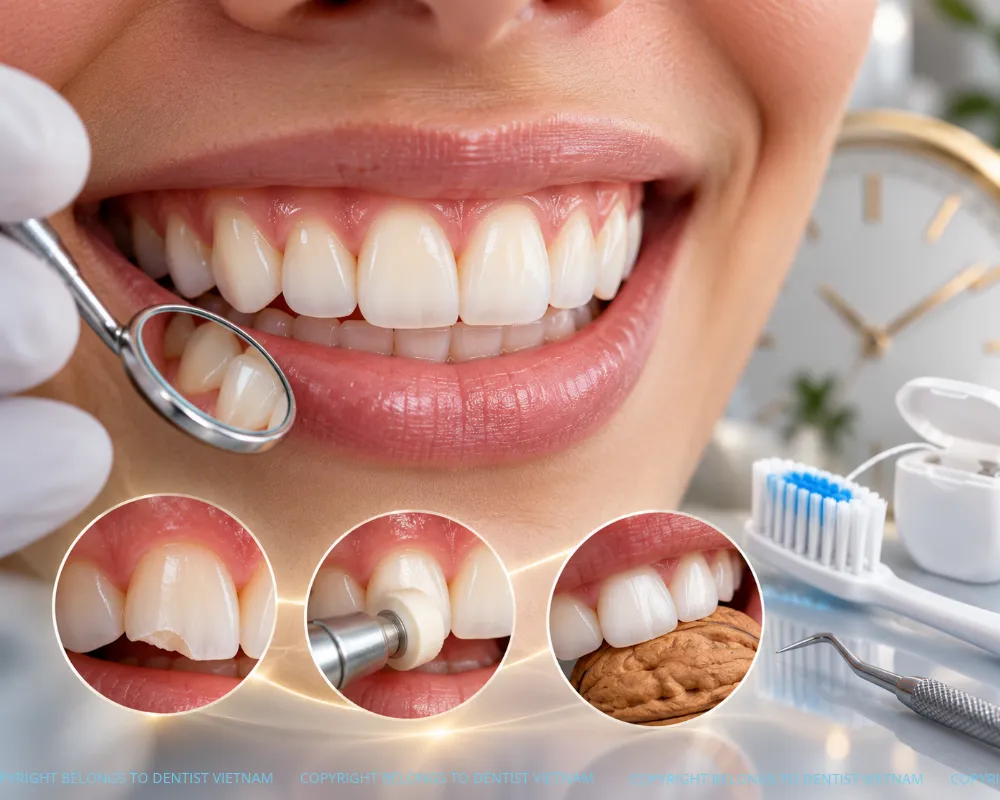
- Biting pressure: Teeth grinding, nail-biting, and chewing hard objects can cause composite resin to chip or wear prematurely.
- Veneer size and bonding: Larger restorations and inadequate bonding may increase the risk of cracks or detachment.
- Regular maintenance: Dental examinations, professional polishing, and timely repairs can help maintain veneer appearance and function.
7. How much do direct composite veneers cost?
Saigon White Dental lists original prices for composite bonding and two porcelain veneer materials, but not specifically for this veneer type. The table below separates published prices from services that require an individual written quotation.
| Treatment or Cost Factor | Estimated Price (VND) | Estimated Price (USD) |
| Composite veneer (per tooth) | 3.000.000 | $134 |
| Online booking promotion (per tooth) | 10.000.000 | $390 |
| Optional 3D smile mock-up | 15.000.000 | $580 |
Published prices list composite bonding at $134, Emax porcelain veneers at $390, and Lisi porcelain veneers at $580 per tooth. Since composite bonding does not necessarily cover a full direct composite veneer, patients should request a separate quote clearly specifying veneer coverage and included services.
8. How to care for direct composite veneers
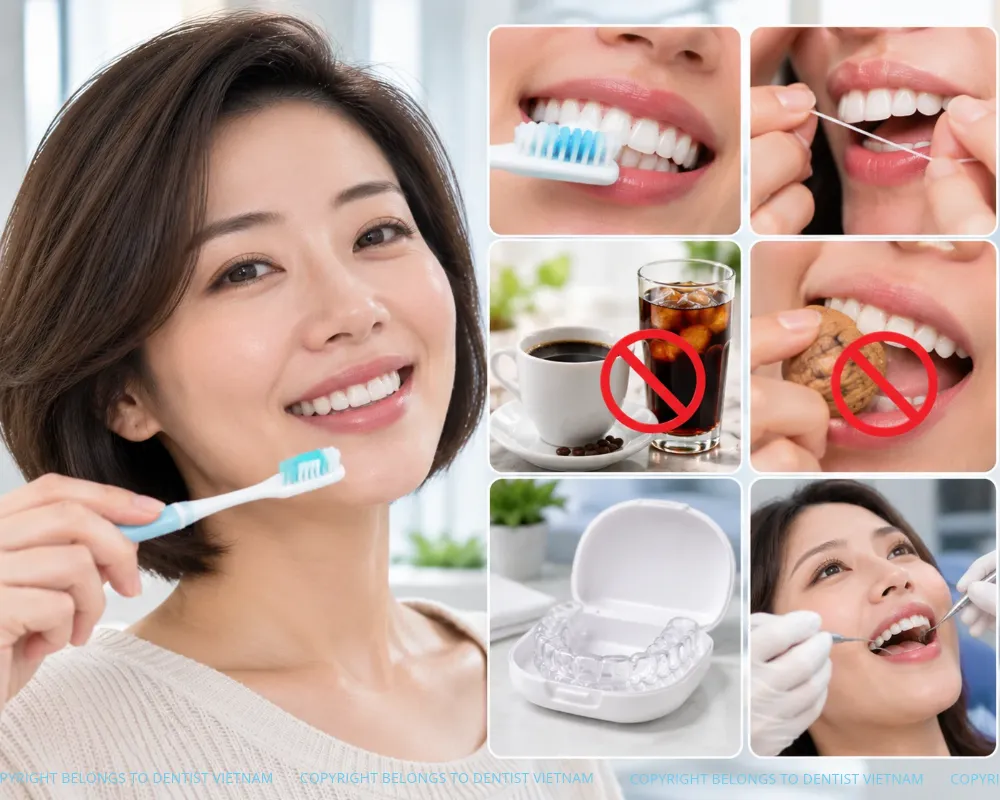
Proper care helps direct composite veneers retain their color, smoothness, and appearance over time. The following six habits cover daily cleaning, stain prevention, bite protection, and regular professional dental examinations.
- Brush twice daily: Use fluoride toothpaste and a soft-bristled toothbrush, particularly around the gumline and veneer margins.
- Clean between teeth daily: Floss or use appropriately sized interdental brushes without snapping floss against the bonded edges.
- Avoid using teeth as tools: Do not open packaging, chew ice, or bite pens and fingernails.
- Limit staining exposure: Rinse with water after coffee or tea when practical, and avoid smoking or tobacco use.
- Discuss a night guard: If grinding or clenching is suspected, ask the dentist whether a protective appliance is appropriate.
- Request periodic reviews: Have rough edges, small chips, color changes, or an uneven bite assessed before damage progresses.
9. Conclusion
Direct composite veneers can improve minor chips, gaps, and uneven tooth shapes while preserving enamel in suitable cases. Their lower initial cost and repairability come with a greater need for polishing and stain control than porcelain. Visit Dentist in Vietnam to compare cosmetic dentistry options and learn how to choose an appropriate dental clinic.