
All on 6 dental implants replace a full arch of missing teeth with a fixed bridge anchored to six implants. This approach can improve chewing and comfort, but suitability depends on jawbone health and careful planning. Below, we explain costs in Vietnam, benefits, risks, recovery stages, and travel considerations. Explore these essentials with Dentist in Vietnam before making your decision.
1. What are all-on-6 dental implants?
With all on 6 dental implants, a dentist places six posts, usually made of titanium, into the upper or lower jawbone. These dental implants act as anchors for a fixed bridge carrying a full set of replacement teeth, which remains in place during normal daily activities rather than being removed each night.
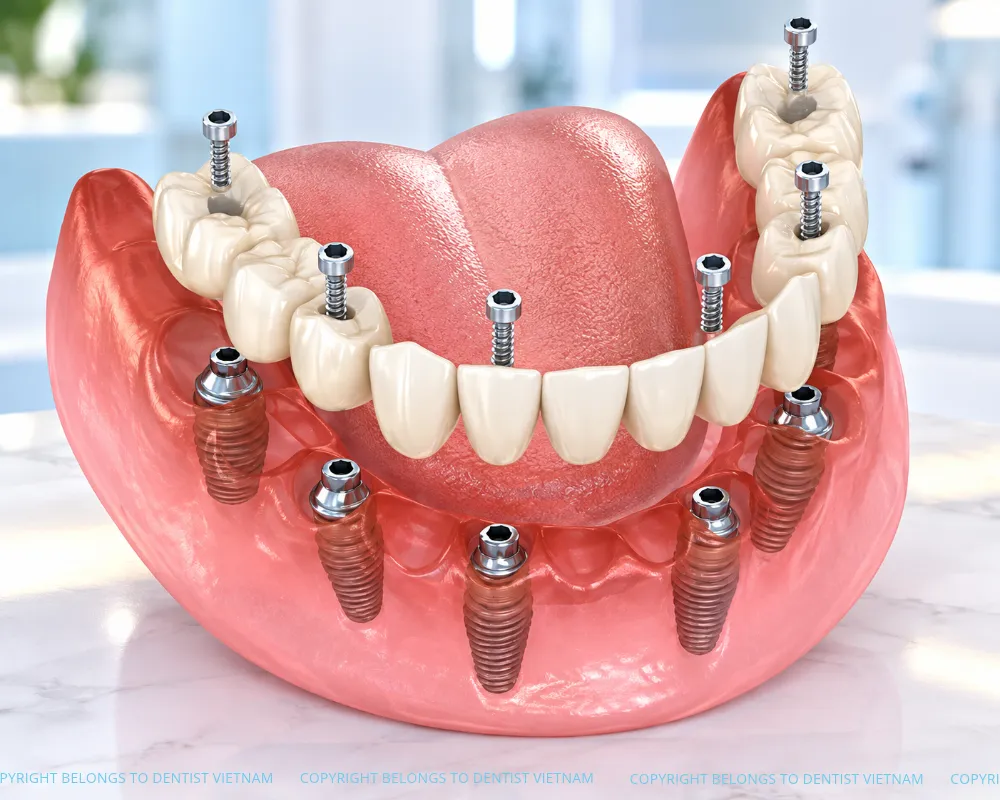
Six implants do not mean six replacement teeth. One bridge can replace an entire arch. Patients missing teeth in both jaws may need twelve implants, with six supporting the upper bridge and six supporting the lower. The dentist selects their positions according to bone availability and bite requirements.
2. Who is a good candidate for all-on-6 dental implants?
Candidates for all on 6 dental implants generally need to replace nearly all teeth in one arch and have a jaw that can securely support six implants. However, appearance alone cannot determine eligibility. A dental examination, medical review, and three-dimensional CBCT scan help establish whether all on 6 dental implants are suitable.
- Extensive tooth loss: People missing all or most upper or lower teeth may benefit from a fixed full-arch bridge.
- Failing remaining teeth: Severely damaged teeth may require extraction, but any teeth that can be preserved deserve proper assessment first.
- Sufficient jawbone: Bone height, width, and density influence implant positioning, some patients need grafting or another implant arrangement.
- Healthy gums: Active gum infection should be managed before surgery, with a practical plan for cleaning the future bridge.
- Stable general health: Uncontrolled diabetes, heavy smoking, and certain medicines can increase risks or delay healing and require individual review.
3. Benefits and risks of all-on-6 dental implants
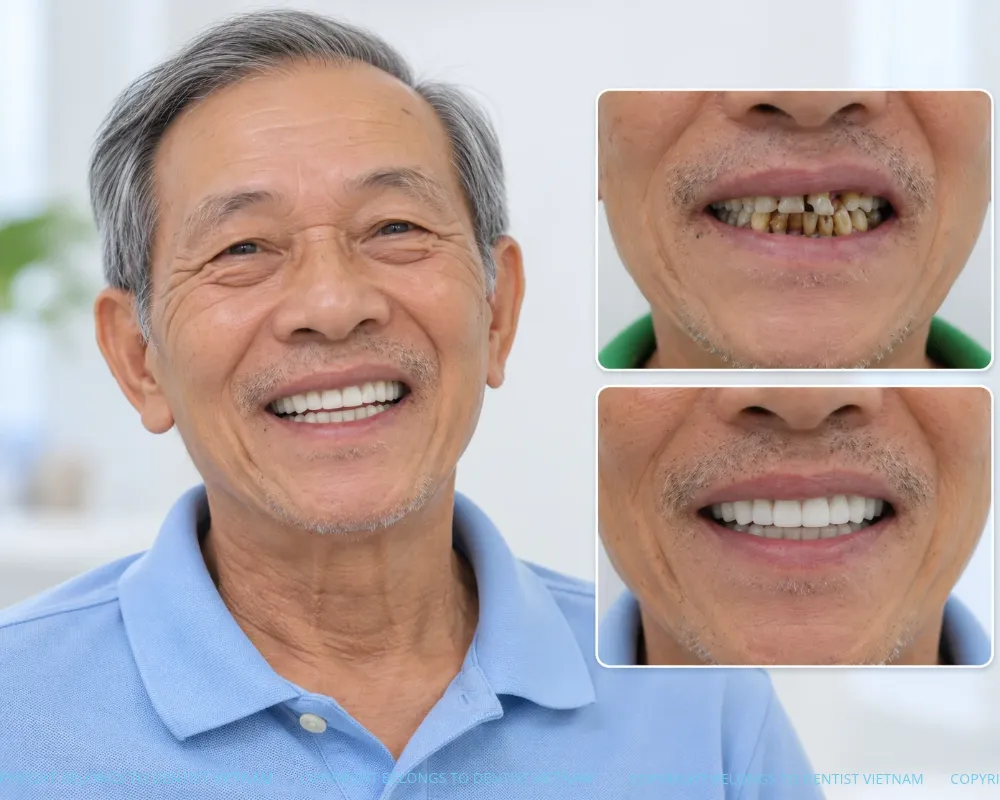
The main attraction of all on 6 dental implants is a fixed set of teeth supported by the jaw, rather than a removable plate resting on the gums. However, surgery involves risks, and the bridge still needs professional maintenance. Understanding both sides helps patients decide whether the advantages justify the commitment.
Potential benefits
- Chewing firm foods: A securely fitted bridge can help patients bite cooked meat or crunchy vegetables without removable dentures shifting.
- No nightly removal: The bridge stays in place during sleep, patients clean around and beneath it rather than removing dentures.
- Natural smile design: Dentists select tooth size, color, and position based on facial features and gum contours when designing bridges.
- Less gum irritation: A well-fitted fixed bridge can reduce rubbing and sore spots caused by removable dentures shifting during meals.

Potential risks
- Post-surgery swelling: Cheeks may swell for several days, with bruising or minor bleeding, increasing pain or fever warrants immediate assessment.
- Implant complications: Bleeding gums, persistent swelling, or a loose implant require examination because infection or poor integration may threaten stability.
- Bridge damage: Hard foods or teeth grinding may chip the bridge, loosen screws, and require an additional dental repair appointment.
4. All-on-6 vs. all-on-4 dental implants: Key differences
Both same day all on 4 dental implants and All-on-6 restorations can support a fixed full-arch bridge, although implant placement, bone requirements, and treatment costs differ. The table below compares the practical differences patients should consider when planning surgery and choosing an appropriate restoration.
| Comparison criteria | All-on-4 | All-on-6 |
| Number of implants | 4 implants per arch | 6 implants per arch |
| Implant placement | Rear implants often angled | 6 positions across the jawbone |
| Bone requirements | May suit limited rear jawbone | Requires adequate bone at 6 sites |
| Bone grafting | May avoid grafting in selected cases | May require grafting if bone is insufficient |
| Surgical procedure | 4 implant sites | 6 implant sites |
| Bridge support | Supported by 4 implants | Supported by 6 implants |
| Overall cost | Approximately $8,048-$11,407 | Approximately $9,593-$14,448 |
All-on-4 may be preferable when rear jawbone is limited, while all on 6 dental implants require six suitable placement sites. A six-implant bridge also generally costs more because two additional posts are placed. Ask your dentist to explain the recommended positions using your CBCT scan.
5. All-on-6 dental implants cost in Vietnam
The cost of all on 6 dental implants in Vietnam varies by implant brand, bridge material, and the number of arches restored. The table below compares published prices for one arch and estimated costs for both arches to clarify expenses.
| Implant system (per arch) | Initial cost (USD) | Total with Zirconia (USD) | Total with Cercon (USD) |
| Dentium (Korea) | $5,410 | $9,593 | $10,353 |
| Neodent (Switzerland) | $7,604 | $11,787 | $12,547 |
| Nobel / Straumann | $10,265 | $14,448 | $15,208 |
6. All-on-6 dental implant recovery and aftercare
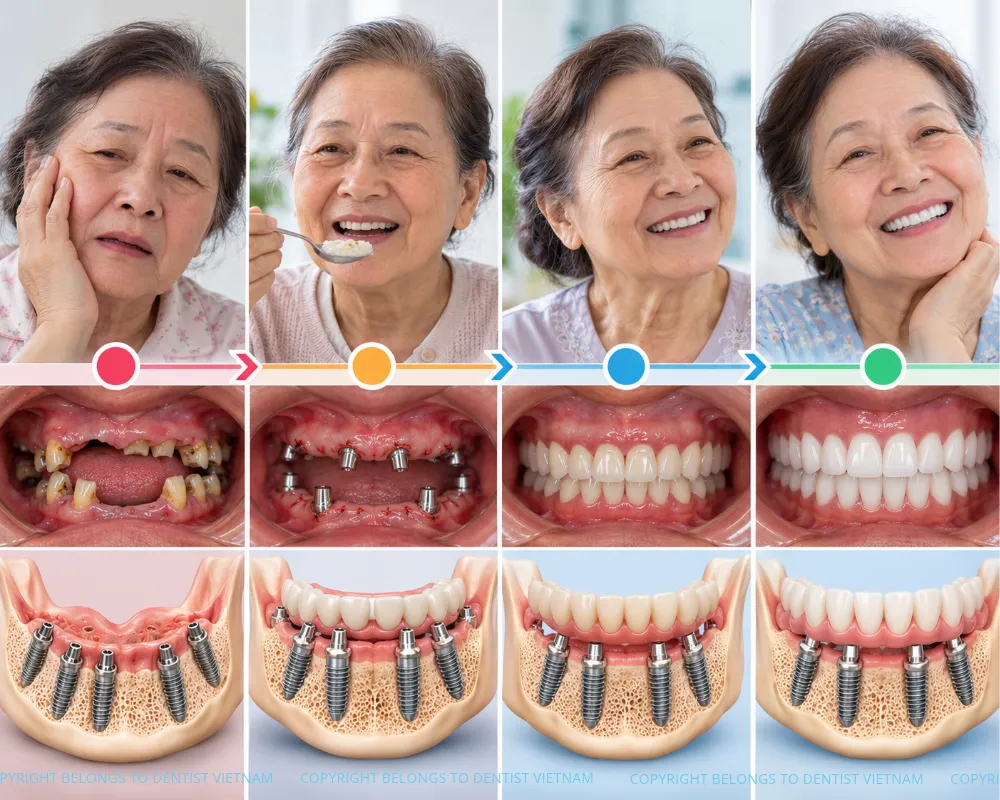
Recovery after all-on-6 dental implant surgery begins with gum tissue healing and continues as the implants gradually integrate with the surrounding jawbone. Even when temporary teeth are fitted early, patients should follow their dentist’s instructions on eating, oral hygiene, medication, and follow-up appointments throughout recovery.
6.1 Recovery timeline from surgery to full healing
Healing after all on 6 dental implants varies according to bone quality, extractions, grafting, and general health. The following milestones are typical rather than promised deadlines.
- First 24-72 hours: Some oozing, swelling, bruising, and soreness are expected. Rest, take prescribed medicines correctly, and avoid disturbing surgical sites.
- Days 4-14: Discomfort should generally ease, eat soft foods, clean only as instructed, and attend the scheduled wound or stitch check.
- Weeks 2-8: Gums continue settling, temporary teeth may need adjustment, do not assume they can handle hard or sticky foods.
- Months 2-6 or longer: Bone continues bonding to the implants, the dentist assesses stability before fitting or finalizing the permanent bridge.
6.2 Long-term care and implant lifespan
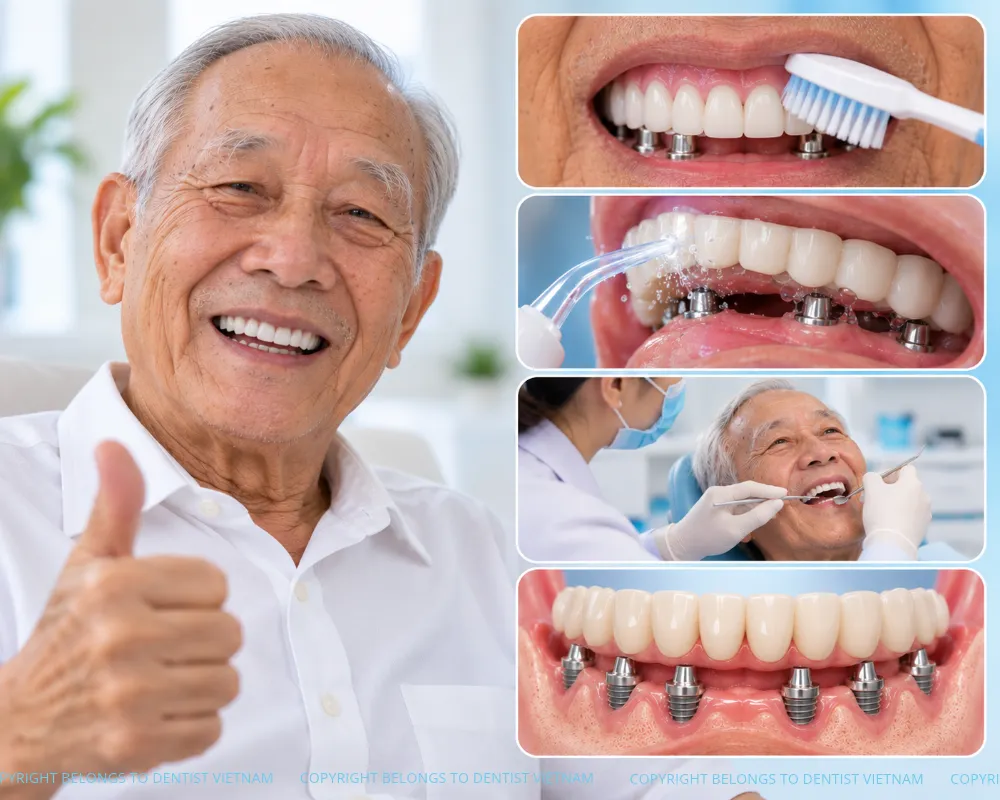
Keeping all on 6 dental implants clean means removing trapped food beneath the fixed bridge, not just brushing visible teeth. Follow these four daily and professional care steps to reduce inflammation and costly bridge repairs.
- Brush twice daily with a soft toothbrush, cleaning along the gums and behind the fixed teeth, not just the front.
- Use a water flosser or floss threader daily to remove food trapped underneath the bridge, especially after eating meat.
- Visit your dentist at recommended intervals to remove hardened plaque and check for loose screws, worn teeth, or cracks.
- Contact your dentist if the bridge moves, gums bleed repeatedly, or chewing becomes painful instead of attempting repairs yourself.
7. All-on-6 dental implants in Vietnam: What international patients should know
International patients considering all on 6 dental implants vietnam should confirm the dentist’s plan, total clinic visits, temporary teeth availability, and final bridge delivery before booking flights. When comparing all-on-6 dental implants vietnam options, also check written fees, required healing time, and local follow-up arrangements.
Most international patients need two trips to Vietnam: the first for implant placement and the second for fitting the final bridge after healing. The table below outlines the procedures and travel arrangements for each stage.
| Stage | Dental procedures | Travel considerations |
| First trip | CBCT scan, placement of six implants, temporary teeth if suitable | Stay for postoperative checks before flying home |
| Healing period | Implants bond with the jawbone, usually over 2-6 months | Recover at home and attend scheduled local dental checks |
| Second trip | Check implant stability, take impressions, fit and adjust the final bridge | Allow time for bridge fabrication and bite adjustments |
8. Conclusion
All on 6 dental implants can restore a full arch of missing teeth, but long-term success depends on jawbone condition, accurate implant placement, and consistent aftercare. Before proceeding, patients should confirm the total treatment cost, expected healing period, and follow-up schedule with their dentist. Explore Dentist in Vietnam to learn more about available implant options and make an informed decision.